

 Posted by
 The Need for Consistent Coil Winding
In industries such as transformers, motors, and electronic components, coil quality directly impacts performance. Even small variations in winding can lead to inefficiency, overheating, or product failure.
This is where a wire bobbin winding machine becomes essential. It helps manufacturers maintain consistency, accuracy, and repeatability in coil production, especially when working with high volumes.
Common Challenges in Coil Winding
Many manufacturers still rely on manual or semi-automatic processes. While these methods may work for small-scale operations, they often create problems such as:
- Uneven winding and spacing
- Inconsistent tension control
- Higher rejection rates
- Increased dependency on operator skill
Over time, these issues affect both productivity and product quality.
How a Wire Bobbin Winding Machine Solves These Issues
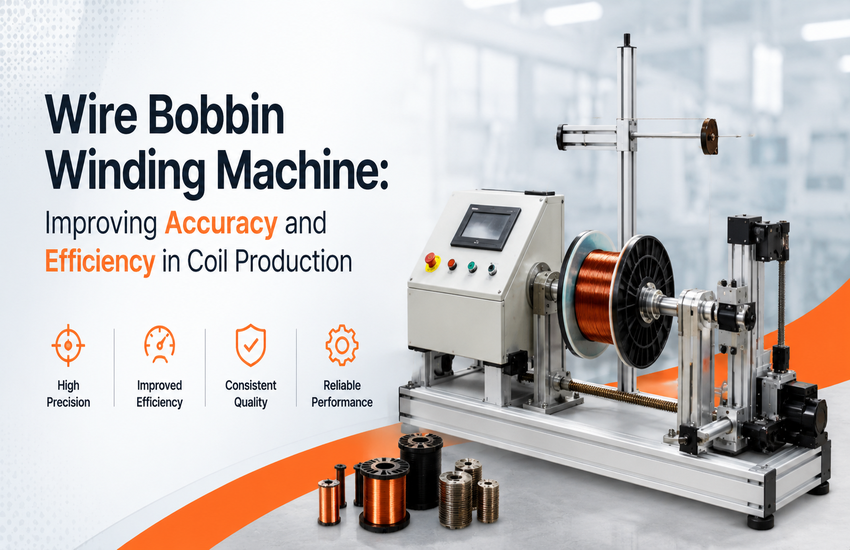
A wire bobbin winding machine is designed to automate and control the winding process with precision. It ensures that wire is wound evenly onto bobbins while maintaining consistent tension and alignment.
This results in:
- Uniform coil structure
- Improved production speed
- Reduced human error
- Better quality control
For industries where precision is critical, automation plays a key role in maintaining standards.
Key Features That Improve Performance
When selecting a machine, certain features make a significant difference in output quality and efficiency.
Programmable Control System
Modern machines allow operators to set parameters such as number of turns, speed, and winding patterns. This ensures repeatability and reduces manual intervention.
Precision Tension Control
Maintaining consistent tension is crucial to prevent wire damage and ensure proper winding alignment.
Multi-Application Capability
A wire bobbin winding machine can be used for different coil types across various industries.
Integration with Automatic Coil Winding Machine
In advanced setups, integration with an automatic coil winding machine allows for higher efficiency, especially in large-scale production environments.
Applications of Wire Bobbin Winding Machines
These machines are widely used in:
- Transformer coil manufacturing
- Motor winding applications
- Electrical and electronic components
- Power supply and SMPS systems
Their flexibility and precision make them suitable for both standard and customized coil production.
Importance of Choosing the Right Manufacturer
The performance of a machine depends not only on its features but also on the quality of its design and manufacturing.
ACME Mechatronics is engaged in manufacturing coil winding machines with programmable features designed to meet industrial requirements. With experience in developing winding solutions, the company focuses on delivering machines that support consistent and accurate coil production.
Why Precision Winding Matters
The quality of winding directly affects:
- Electrical efficiency
- Heat resistance
- Product durability
Using a reliable wire bobbin winding machine helps ensure that coils meet required standards, reducing the chances of defects and improving overall performance.
As manufacturing demands continue to increase, the need for precise and efficient winding solutions becomes more important. A wire bobbin winding machine is a key investment for businesses looking to improve consistency, reduce errors, and enhance productivity.
When combined with advanced systems like an automatic coil winding machine, it provides even greater control and efficiency for high-volume production. With the right equipment and a reliable manufacturer such as ACME Mechatronics, businesses can achieve better results while maintaining quality standards.
FAQs
What is a wire bobbin winding machine used for?
It is used to wind wire onto bobbins for applications such as transformers, motors, and electronic components.
What is the advantage of using an automatic coil winding machine?
It improves efficiency, ensures consistent winding, and reduces manual errors in large-scale production.
Can a wire bobbin winding machine handle different wire types?
Yes, it can handle various wire types depending on machine configuration and settings.
Which industries use these machines?
Industries like transformer manufacturing, electronics, and motor production commonly use these machines.
Why is tension control important in winding?
Proper tension ensures uniform winding and prevents damage to the wire.