

 Posted by
 Precision is one of the most important factors in coil manufacturing. Even a small variation in wire placement or tension can affect the performance, appearance, and reliability of a finished coil.
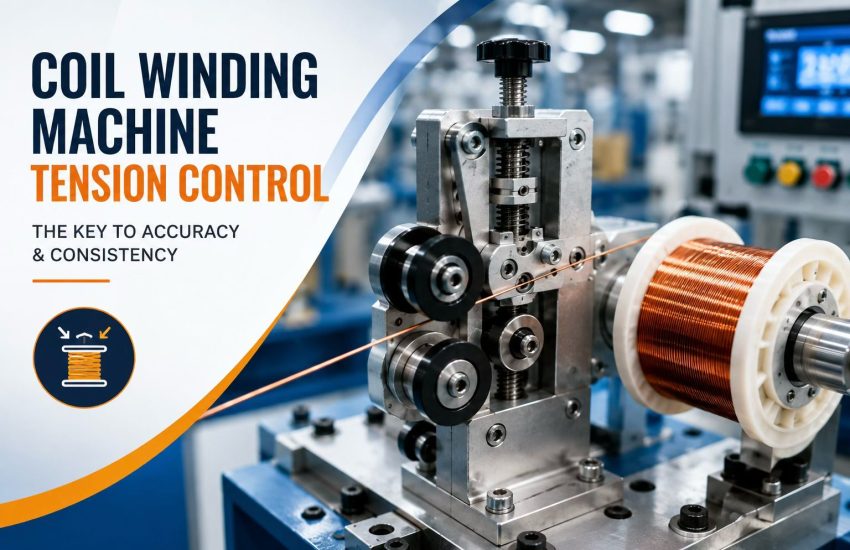
This is why Coil Winding Machine Tension Control plays an important role in modern winding processes.
Wire must maintain the appropriate level of tension while moving from the supply spool through the tensioning system and onto the winding component. If tension is too high, the wire can stretch, break, or damage insulation. If tension is too low, the wire may become loose, overlap incorrectly, or create inconsistent winding.
ACME Mechatronics develops winding solutions and tension-control technologies designed to help manufacturers achieve consistent and precise winding results.
What Is Wire Tension Control?
Wire tension control is the process of maintaining a controlled pulling force on the wire throughout the winding operation.
The purpose is to ensure that the wire reaches the winding area at a consistent tension regardless of changes in spool diameter, winding speed, or production conditions.
A properly controlled tension system helps maintain:
- Uniform wire placement
- Consistent winding density
- Better coil dimensions
- Improved electrical performance
- Reduced wire breakage
- Higher production consistency
Why Is Tension Important in Coil Winding?
The quality of a finished coil depends heavily on how consistently the wire is applied.
Incorrect tension can create several manufacturing problems.
Excessive Wire Tension
Too much tension can cause:
- Wire stretching
- Insulation damage
- Wire breakage
- Deformation of delicate components
- Increased machine downtime
Insufficient Wire Tension
Low tension can result in:
- Loose windings
- Uneven layers
- Wire overlap
- Poor coil geometry
- Inconsistent electrical characteristics
Maintaining the correct tension helps manufacturers achieve reliable and repeatable winding results.
How Does a Winding Tension Control System Work?
A modern Winding Tension Control System regulates the force applied to the wire as it moves through the winding machine.
Depending on the machine design, the system may use mechanical, electronic, or servo-controlled components to maintain the desired tension.
The system continuously helps compensate for changes such as:
- Wire speed
- Spool diameter
- Acceleration
- Deceleration
- Winding direction
- Production conditions
This allows the winding process to remain stable even during high-speed production.
Benefits of Coil Winding Machine Tension Control
1. Improved Winding Accuracy
Consistent tension helps ensure that every turn of wire is placed correctly, improving overall coil geometry and dimensional accuracy.
2. Reduced Wire Breakage
Excessive tension is one of the factors that can contribute to wire breakage. Proper control reduces unnecessary stress on the wire.
3. Better Product Consistency
Maintaining consistent tension across production cycles helps manufacturers produce coils with repeatable characteristics.
4. Reduced Material Waste
Fewer broken wires and defective coils mean less material is wasted during production.
5. Higher Productivity
Reducing wire-related interruptions allows machines to operate more consistently and minimizes unnecessary downtime.
Applications of Wire Tension Control
Tension control is important in many winding applications, including:
- Transformer coils
- Motor windings
- Inductors
- Solenoids
- Electrical coils
- Automotive components
- Power electronics
- Medical equipment
- Precision electronic components
The required tension level depends on the wire diameter, insulation, material, winding pattern, and application.
Factors That Affect Winding Tension
Several factors can influence tension during the winding process.
Wire Diameter
Thin wires are generally more sensitive to excessive tension and require careful control.
Winding Speed
Higher winding speeds can create greater tension variations if the system is not properly controlled.
Spool Diameter
As wire is removed from a spool, the effective spool diameter changes. A good tension-control system compensates for these variations.
Wire Material
Copper, aluminum, and other wire materials can behave differently during winding and may require different tension settings.
Winding Pattern
Different winding configurations may require different tension levels to achieve consistent results.
How ACME Mechatronics Supports Precision Winding
At ACME Mechatronics, precision is central to the design of modern winding equipment.
Proper Wire Tension Control can be integrated into winding processes to help manufacturers maintain consistent production quality while reducing wire-related defects.
By combining accurate machine control with appropriate tension-management technology, manufacturers can improve winding consistency and production efficiency.
How to Improve Coil Winding Accuracy
Manufacturers can improve winding performance by:
- Selecting the appropriate tensioner
- Calibrating tension settings
- Maintaining consistent winding speed
- Using suitable wire guides
- Inspecting wire quality
- Performing regular machine maintenance
- Monitoring production parameters
- Using automated tension control where appropriate
The correct combination of machine settings and tension control can significantly improve finished coil quality.
Conclusion
Coil Winding Machine Tension Control is an important part of achieving consistent, accurate, and reliable winding results.
Correct wire tension helps prevent wire breakage, uneven winding, insulation damage, material waste, and production interruptions. It also supports better coil quality and repeatability.
For manufacturers handling precision electrical components, investing in appropriate Winding Tension Control Systems can provide significant improvements in productivity and manufacturing consistency.
With advanced winding expertise and application-focused solutions, ACME Mechatronics helps manufacturers address their winding requirements with precision-engineered equipment and reliable technology.
Frequently Asked Questions
1. What is Coil Winding Machine Tension Control?
It is a system used to maintain a consistent level of tension on wire throughout the winding process, helping achieve accurate and uniform coils.
2. Why is wire tension important during winding?
Correct wire tension prevents problems such as wire breakage, loose winding, uneven layers, and insulation damage while improving overall winding consistency.
3. What happens when wire tension is too high?
Excessive tension can stretch or break the wire and may damage its insulation, leading to production defects and material waste.
4. What happens when wire tension is too low?
Low tension can result in loose or uneven windings, overlapping wire, and inconsistent coil dimensions.
5. Can tension control improve winding machine productivity?
Yes. Consistent tension can reduce wire breakage and production interruptions, helping improve machine uptime and overall productivity.
6. What factors determine the correct wire tension?
Wire diameter, material, insulation, winding speed, spool characteristics, and winding pattern all influence the appropriate tension setting.
7. Does ACME Mechatronics offer winding solutions with tension control?
ACME Mechatronics provides precision winding solutions and technologies designed to support accurate wire handling and consistent winding performance for industrial applications.